
In an age where staying connected is more important than ever, even in the great outdoors, a reliable power source is a must-have for any adventurer. Portable solar panels offer a green and convenient way to keep your essential gadgets charged, from your smartphone to your high-capacity power station. This guide will walk you through everything you need to know about choosing and using portable solar panels, whether you’re a backpacker needing a lightweight solution or a camper with a power-hungry setup.
For the Trail: Lightweight Panels for Backpacking
When every gram counts, a compact and efficient solar panel is your best friend. These smaller panels are designed to be strapped to your backpack, soaking up the sun’s rays as you hike. They are perfect for keeping small devices like phones, GPS units, and headtorches topped up.
What to look for:
- Wattage: Look for panels in the 10-30 watt range. This is a good balance between size, weight, and charging capability for personal devices.
- Weight and Portability: Opt for foldable panels that are lightweight and compact. Many are designed to be easily attached to your rucksack.
- Durability: Ensure the panel is rugged and weather-resistant to withstand the rigours of the trail.
Our Top Picks:
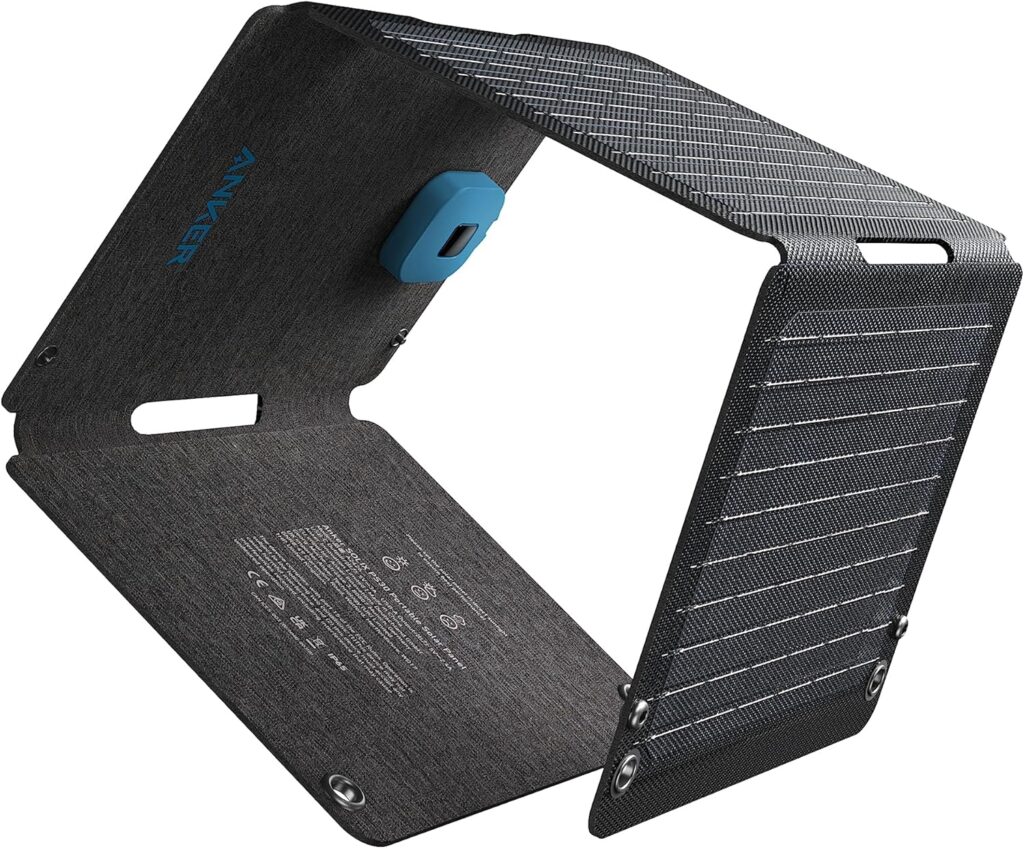
- Anker Solix PS30 Solar Panel, 30W Foldable Portable Solar Charger: A popular choice for its efficiency and dual USB ports, allowing you to charge multiple devices at once. https://amzn.to/40P8P4P
- BigBlue 28W Solar Charger Foldable with Digital Ammeter: This panel features an integrated ammeter to help you see the power being produced when positioning. https://amzn.to/4nOgpXp
- Goal Zero Nomad 10: A lightweight and rugged panel that’s a favourite among thru-hikers for its reliability and ease of use. https://amzn.to/453ERwC
Powering Your Basecamp: Panels for Mid-Size Power Stations
For those with larger power needs, such as running a portable fridge, lights, or charging multiple devices simultaneously, a more substantial solar panel is required. These are designed to be paired with power stations, which are essentially large power banks with capacities often between 500Wh and 1000Wh.
What to look for:
- Wattage: Panels in the 100-200 watt range are ideal for pairing with these power stations, providing a good rate of charge.
- Compatibility: Ensure the panel’s connectors (often MC4 or Anderson) are compatible with your power station’s input. Many brands offer their own panels designed to work seamlessly with their power stations.
- Portability: While larger, these panels are often foldable and come with carrying handles for easier transport from your vehicle to your campsite.
Our Top Picks:
- Jackery SolarSaga 100W: A highly-rated and user-friendly panel that’s a perfect match for Jackery’s popular Explorer series of power stations. https://amzn.to/40STO1W
- EcoFlow 160W Solar Panel: Known for its high efficiency and robust build quality, this panel is a great option for those who need to generate a significant amount of power. https://amzn.to/4eSpF8P
- Renogy 100W Foldable Solar Panel Suitcase: A durable and efficient option that comes with a protective case and adjustable legs for optimal positioning. https://amzn.to/46HUyuA
Maximum Power: Panels for Expedition-Sized Power Stations
For serious off-grid power, such as for a campervan, a remote cabin, or as part of a home emergency backup, you’ll need the largest portable panels available. You might also consider these panels for long camps where power is needed for a long period of time. These powerhouses are designed to charge expedition-sized power stations, typically those with a capacity of 2000Wh (2kWh) or more. A larger panel array is crucial for recharging these high-capacity units in a reasonable amount of time.
What to look for:
- High Wattage: Look for single panels or arrays in the 400-500 watt range. This level of output is necessary to make a meaningful impact on a 2000Wh battery.
- Efficiency: At this size, a high-efficiency rating (typically 22% or higher) is key to maximising power generation and minimising the panel’s physical footprint.
- Robust Design: These are significant investments. Look for durable construction, high IP ratings for water and dust resistance (like IP68), and sturdy, adjustable kickstands.
Our Top Picks:
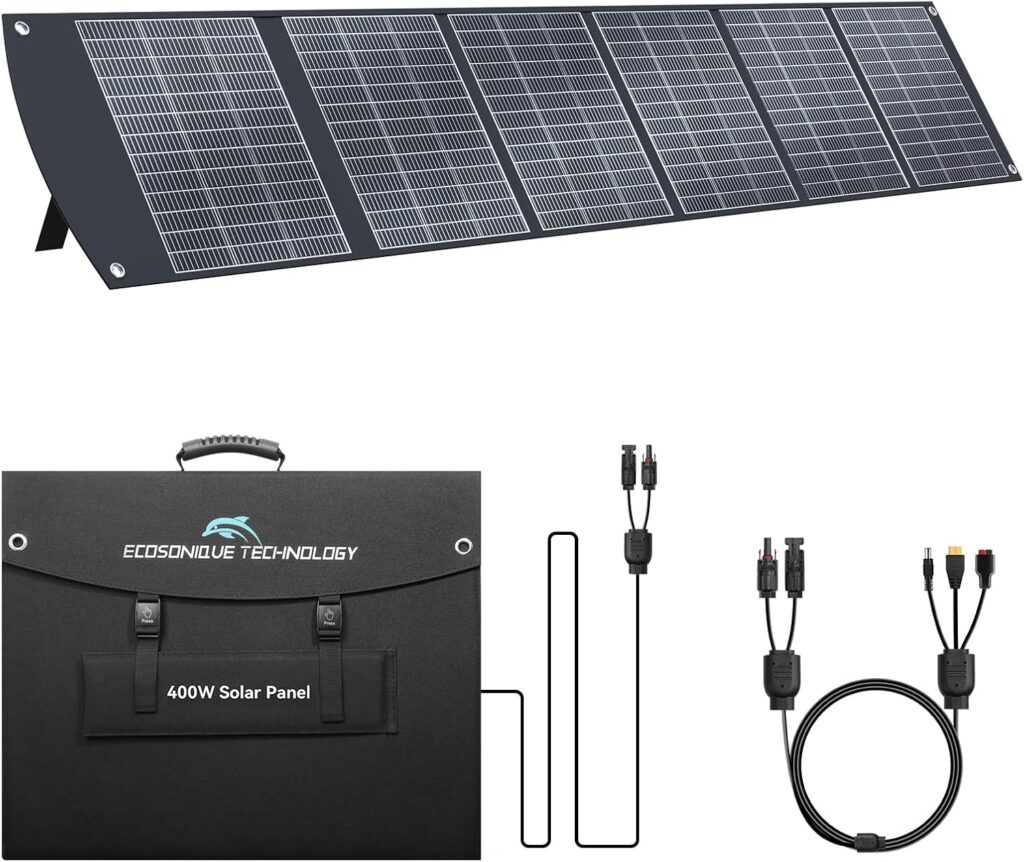
- Ecosonique 400W Portable Solar Panel: A foldable panel that packs a massive punch for its low price. Making it a perfect companion for large power stations. https://amzn.to/4kIHUim
- BLUETTI Solar Panel 350W: Offering a huge 350W of power, this panel is designed for rapid charging of units like the Bluetti AC200MAX. It’s foldable, durable, and uses monocrystalline cells for excellent performance. https://amzn.to/4nL0k4Z
- Anker SOLIX PS400 400W Portable Solar Panel: Anker brings its reputation for quality to the high-wattage market. This 400W panel is a fantastic option for charging large power stations and features an adjustable kickstand to easily track the sun. https://amzn.to/4lorIny
Getting the Most Out of Your Setup
To maximise the efficiency of your portable solar panel system, keep these tips in mind:
- Angle is Everything: Position your panel to face the sun as directly as possible. The optimal angle will change throughout the day and with the seasons. Many larger panels come with built-in kickstands to help with this.
- Stay Out of the Shade: Even a small amount of shade on your panel can significantly reduce its output.
- Keep it Clean: A dirty panel won’t capture as much sunlight. Wipe it down with a soft, damp cloth regularly.
Boost Your Input by Linking Panels in Parallel
If you have a large power station, you may notice its maximum solar input (measured in watts) is higher than what a single solar panel can provide. To take full advantage of your power station’s charging capability, you can connect multiple panels together.
This is done by linking them in parallel. In a parallel connection, you use special “Y-branch” connectors to link the positive terminals of the panels together and the negative terminals together. This combines the current (amps) of the panels, effectively adding up their wattage, while keeping the voltage the same.
Why do this?
- Faster Charging: By combining, for example, two 200W panels, you can deliver 400W of power, dramatically reducing the time it takes to charge a large-capacity power station.
- Better Low-Light Performance: On overcast days, a single panel might not produce enough power to initiate charging. A parallel array of panels, however, can combine their lower outputs to produce a meaningful amount of power, ensuring you’re still harvesting energy even in typical British weather.
Important: For best results, it’s highly recommended to use identical panels (same brand and wattage) when connecting in parallel. Also, always ensure the combined output does not exceed the maximum solar input specifications of your power station.